FLAG

MiG-23M tactical fighter aircraft of the
404th Fighter Aviation Regiment at Orlovka airfield
In the 1970s and 1980s, four aviation regiments in the Soviet Far East region operated MiG-23M fighter aircraft type. Two of these regiments belonged to the Air Defense Forces (PVO), while the other two were assigned to Frontal Aviation. Approximately 160 MiG-23M aircraft arrived in the region in the seventies. Among the four regiments, the 404th was the last to receive the MiG-23M variant at Orlovka airport.
Between 1976 and 1977, the 1st Squadron of the 404th Fighter Aviation Regiment transitioned to the new type. The MiG-23M ‘Flogger-B’ aircraft arrived straight from the factory, with air superiority gray paint scheme. Meanwhile, a squadron’s worth of personnel who had already flown the MiG-23 arrived from Soviet units stationed in Hungary to facilitate the transition to the new variant. In exchange, the Orlovka regiment transferred a squadron’s worth of personnel to other Central European Soviet aviation units. The transition of the regiment’s 1st Squadron to the MiG-23M ‘Flogger-B’ proceeded smoothly until the autumn of 1977.
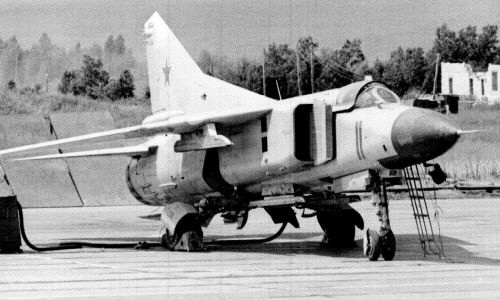
A factory-new MiG-23M ‘Flogger-B’ fighter aircraft of the 1st Squadron at the Orlovka airfield. Photo: Alexander Nikodimov collection
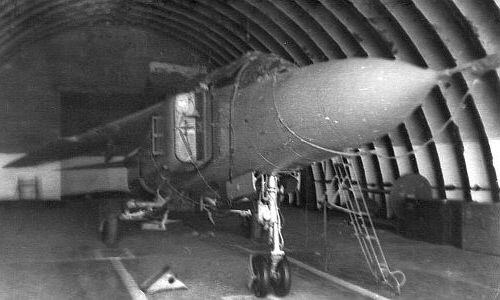
A gray paint scheme MiG-23UB ‘Flogger-C’ tandem-seat trainer of the 404th Fighter Aviation Regiment inside a hardened aircraft shelter (HAS) at the Orlovka airfield in 1978. Photo: Victor Kovalev collection
In the autumn of 1977, the 1st Squadron’s maintenance building at the Orlovka airfield burned down. Kerosene—the aircraft fuel—was being used for heating, which likely caused the fire. Fortunately, no crew members were injured, but the technical logs and documentation for most of the aircraft were destroyed. Without valid logbooks, the new aircraft were grounded; consequently, until the end of 1977, only a few MiG-23s—whose logs had miraculously survived—were permitted to take off.
The maintenance squadron spent the end of 1977 reconstructing and rewriting the aircraft technical logs and documentation. Furthermore, several non scheduled maintenance overhauls had to be performed on the aircraft to re-verify and validate the records.
In 1977, the 1st Squadron of the 404th Fighter Aviation Regiment operated the new MiG-23M ‘Flogger-B’ variant, while the 2nd and 3rd Squadrons still utilized the older, loved MiG-21SM ‘Fishbed-J’. Additionally, the 2nd Squadron operated a few aging MiG-15UTI ‘Midget’ tandem-seat trainers, which were utilized for weather reconnaissance at the beginning of each flight day. Unfortunately, a MiG-15UTI crashed in December 1977, killing both pilots. Following this tragic incident, all remaining MiG-15s were withdrawn from Orlovka.
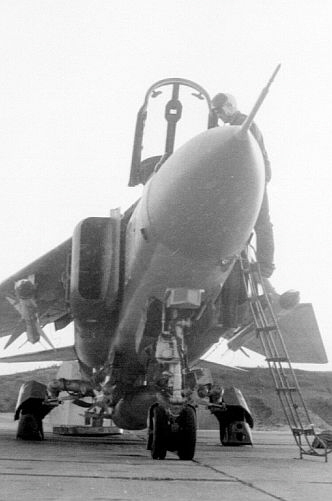
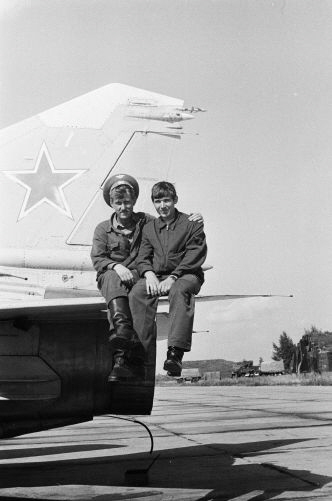
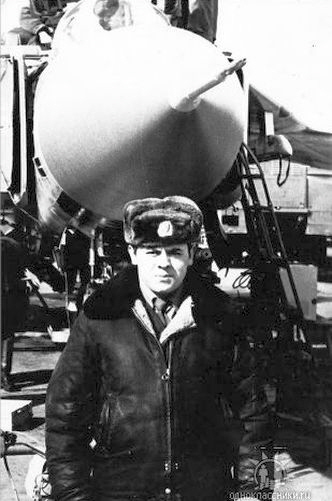
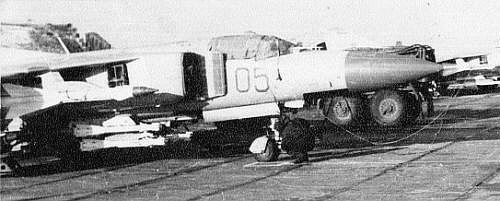
MiG-23 ‘Flogger’ fighter aircrafts at Orlovka airport. Photo: Alexander Nikodimov collection
The 2nd Squadron of the 404th Fighter Aviation Regiment retrainined for MiG-23M ‘Flogger-B’ in early summer 1978, followed by the 3rd Squadron in late summer, with both completing their training at the Lipetsk Training Center. However, instead of factory-new aircraft, these two squadrons received used planes. These older MiG-23Ms were transferred to them in the summer of 1978 by the 32nd Guards Fighter Aviation Regiment, based near Moscow.
In June 1978, the engineer-maintenance team of the 404th Regiment arrived to the 32nd Guards Fighter Aviation Regiment for the technical handover. At the Shatalovo airfield, the hosts attempted to impress the inspection team by wining and dining them over the weekend, hoping they would relax their needs. However, they were mistaken. The engineering-technicians of the 404th Fighter Aviation Regiment remained uncompromising throughout the handover at Shatalovo. They strictly logged every deficiency and unresolved technical issue on the MiG-23s, much to the regret of the 32nd Guards Regiment's personnel. Everything on the MiG-23s had to be repaired before delivery.
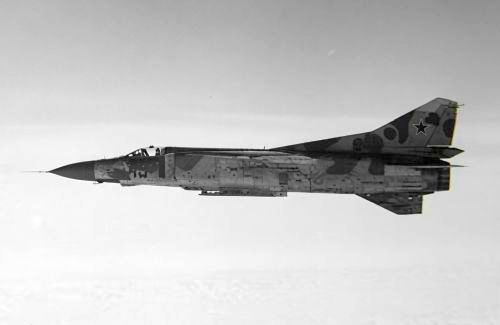
In July and August 1978, the personnel of the 32nd Guards Regiment ferried the MiG-23s from Shatalovo to the Orlovka airfield in the Far East. Each ferry operation lasted four days, with 12 aircraft flying in a single wave. The transit crews rested for two days at Orlovka before flying back home aboard an An-12 transport. However, a few technicians were left behind at Orlovka as 'hostages' to repair any technical faults that arose on the MiG-23s during the long-distance flight.
Left:An ex-32nd Guards Regiment MiG-23M during the 8,000 km (5000 mi) ferry flight from Shatalovo to Orlovka. During this 1978 transit, the early-production aircraft still wore its factory sand-and-green (Middle East) camouflage pattern.
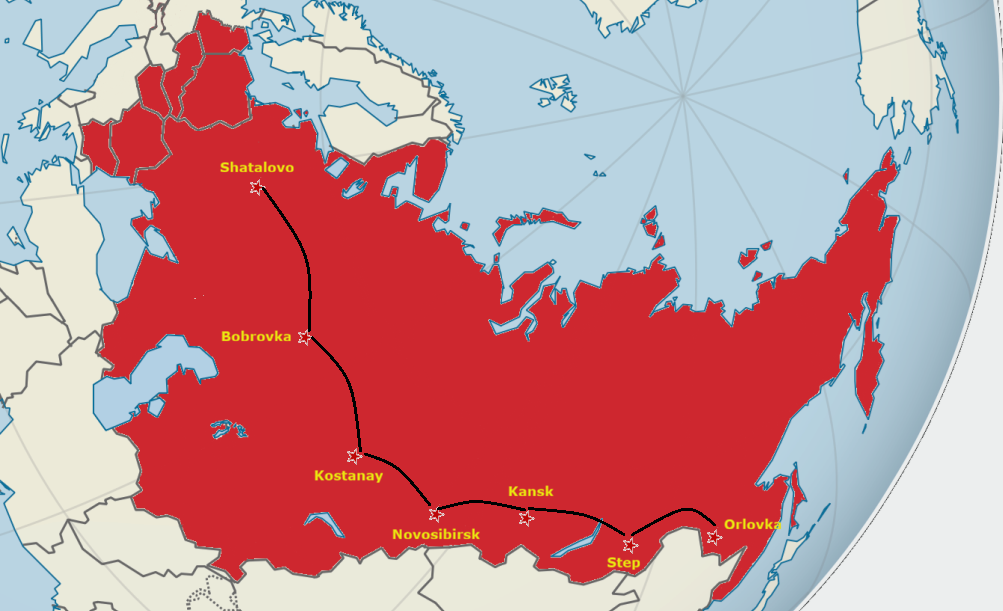
MiG-23M ‘Flogger-B’ transfer from Shatalovo airport to the Orlovka airfield
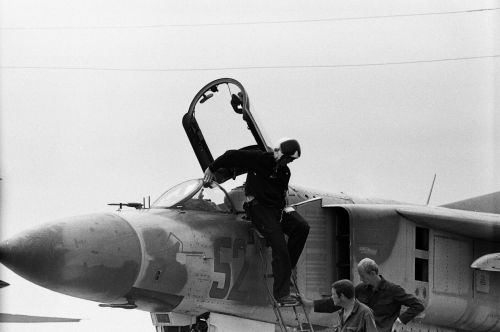
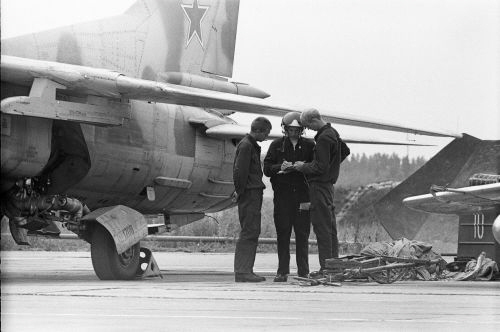
An ex-Shatalovo MiG-23M fighter aircraft, pictured at the Orlovka airfield. This is a very-very early-production airframe from the initial ten-aircraft production batch—this was the eighth MiG-23M ever produced! Photo: Alexander Nikodimov collection
The 1st Squadron’s MiG-23M aircraft were manufactured between 1976 and 1977. They incorporated numerous upgrades that the early-production MiG-23Ms from Shatalovo lacked. Furthermore, factory warranty teams rotated continuously through the Orlovka airfield to resolve any technical faults that arose. Consequently, maintenance operations proceeded seamlessly on MiG-23M type in the 1st squadron, much like on the previously favored MiG-21SM variant.
In contrast, operating the ex-Shatalovo aircraft within the 2nd and 3rd Squadrons was chaotic for both the ground and flight crews.
-
These were very early-production MiG-23Ms, manufactured between 1971 and 1972. Several of the aircraft belonged to the very first 17th production batch, which had served as factory and state test beds in 1971. These airframes from the 17th, 18th, and 19th batches lacked the modifications and upgrades introduced later during mass production and operational service. The aircraft were unreliable, and their hardware configurations frequently did not match subsequent technical documentation. Operating them was a complete nightmare for the maintenance teams.
-
The pilots also faced numerous challenges with these second-hand, early-production MiG-23Ms, as they could only fly them under tight operational restrictions. Due to equipment failures or G-force limitations, they were unable to exploit the aircraft's full capabilities. Frequently, they could not even perform complex aerobatic maneuvers with them.
Compared to the legacy MiG-21SM, these early-production ex-Shatalovo aircraft demanded far more maintenance labor while imposing severe flight restrictions on the 404th Regiment’s personnel. Furthermore, unlike on the MiG-21, the radar cooling system no longer utilized pure alcohol. Consequently, the alcohol — the garrison's universal currency — dried up completely!
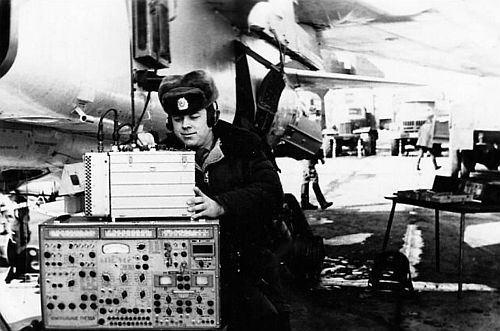
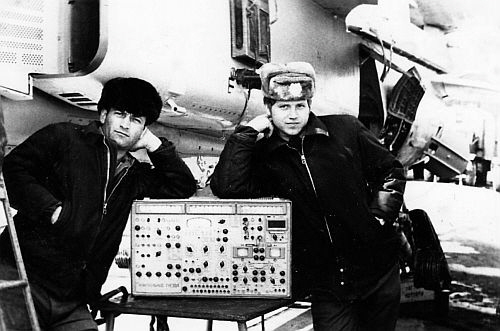
Ground test equipment for the MiG-23M’s analog electronics at the Orlovka airfield. Photo: Tadeusz Kuzmicki collection
.
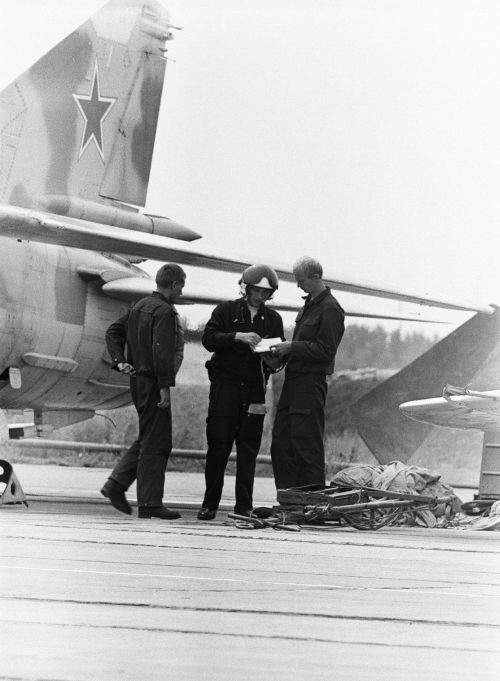
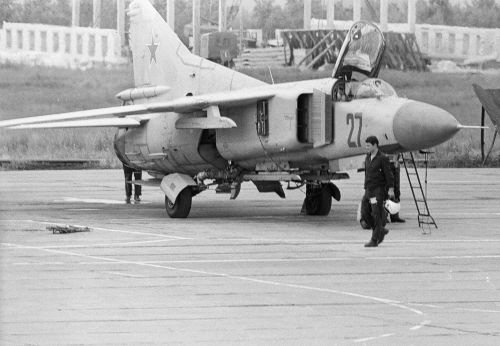
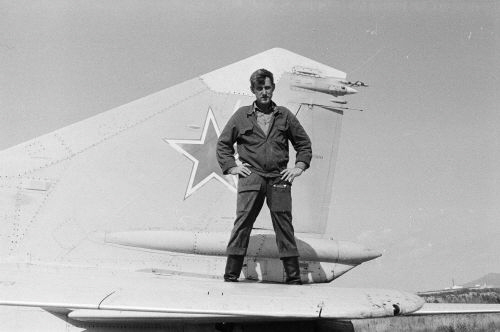
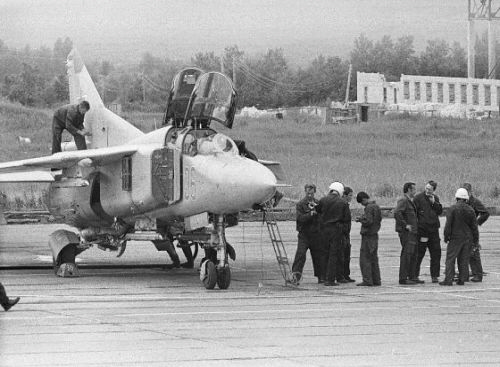
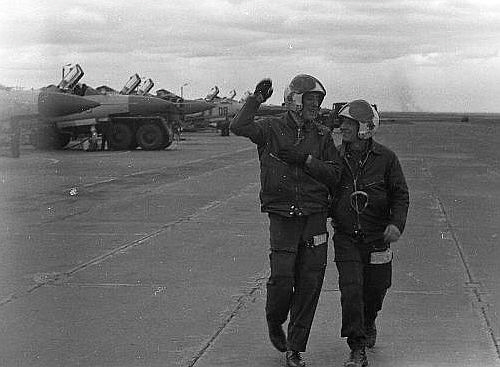
At the Orlovka airport, a portion of the ex-Shatalovo MiG-23s still wore their factory sand-and-green (Middle Eastern) camouflage pattern, while the rest were painted in factory air superiority gray. Photo: Alexander Nikodimov collection
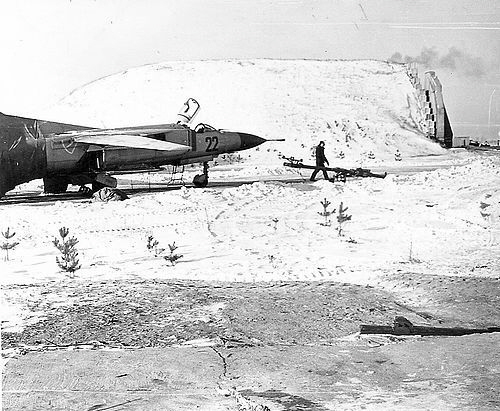
A few accidents occurred with the MiG-23s at the Orlovka airfield during this period. On one aircraft, the canopy detached during takeoff. Another struck a foreign object with its landing gear during landing and sustained damage. The third was the most severe: The first Squadron’s MiG-23M, (tactical number 14), caught fire and was destroyed on the ground.
During engine start, flames erupted from the turbo-starter directly into a kerosene drip tray that a mechanic was currently cleaning. The kerosene ignited! Meanwhile, a fuel hose, which was being used to refuel an adjacent aircraft, lay underneath the MiG-23 right inside the pool of burning kerosene.
The fire truck crew panicked and drove over their own water hose, causing it to burst and dump all its water underneath the fire truck. As a result, the MiG-23 was partially incinerated...
In February 1979, China launched an invasion of Vietnam. The 404th Fighter Aviation Regiment, stationed near the Chinese border, was placed on high alert. The aircraft were fully fueled and the crew stood by for orders. A portion of the MiG-23s were configured with air-to-air missile armaments, while the rest were loaded with bomb and rocket payloads in the first two days.
Furthermore, the Orlovka airfield housed a dedicated nuclear weapons warehouse facility! A separate, specialized unit—referred to as 'the mutes'—guarded the nuclear arsenal. Only they and designated personnel from the 404th Regiment were authorized to load RN-28 tactical thermonuclear bombs onto the under fuselages of the regiment's MiG-23s.
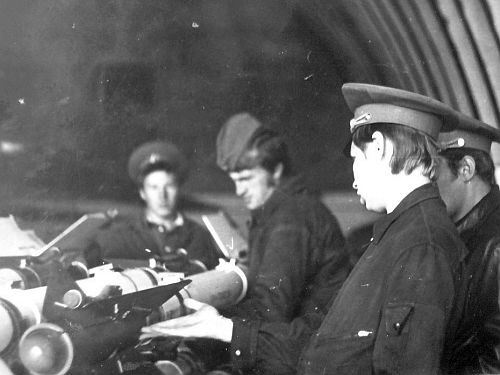
R-13 'Atoll AA-2C' short-range air-to-air missile with a nitrogen-cooled seeker head in hardened aircraft shelter at Orlovka airport. Photo: Vladimir Tursky collction
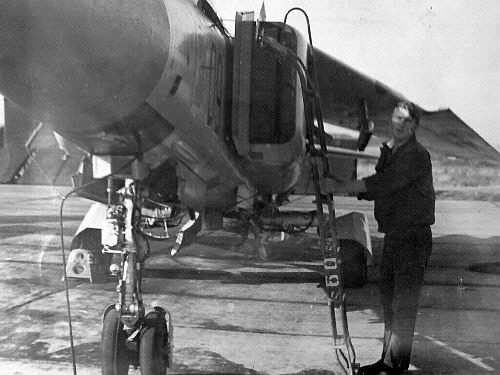
The MiG-23M ‘Flogger-B’ aircraft of the 404th Fighter Aviation Regiment, featuring the BD3-66-23N rack for the RN-28 tactical nuclear bomb on the left centerline fuselage pylon. Photo: Vladimir Tursky collection
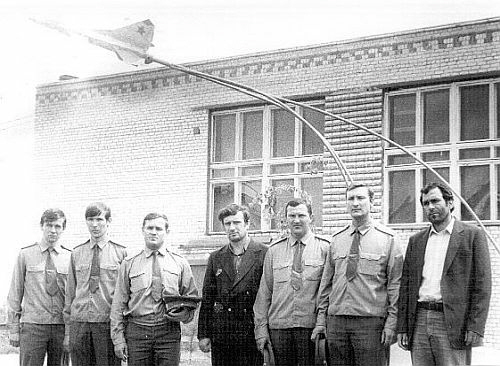
The general mood during this period was characterized by the following:
-
A mass meeting was held at the Central Command Center. Statements from the pilots were read aloud, in which they requested to be deployed into combat to defend socialist Vietnam.
-
Several propaganda posters were displayed across the airfield, bearing the text: 'China possesses 144 nuclear missile launcher, 140 of which are targeted at the Soviet Union!
Fortunately, the Sino-Vietnamese conflict concluded by mid-March 1979, and the high alert status at Orlovka was lifted by spring.
The 404th Fighter Aviation Regiment maintained a reserve airfield near the small town of Magdagachi, which was situated along the Trans-Siberian Railway was located 315 km (196 mi) away northwest of Orlovka. This base was frequently placed on alert, and redeployment to it was regularly practiced from Orovka.
They also conducted live-fire exercises. The 33rd Mixed Aviation Division maintained a firing range near the village of Nikolaevka, located 77 km (47.8 mi) southeast of Orlovka, where the division’s regiments could employ bombs and rockets against ground targets.
Furthermore, they could launch live short-range infrared air-to-air missiles over the Amaranka firing range. There, specialized Il-28 ‘Beagle’ target tug aircraft from the 1st Air Army droped parachute-retarded M-6 aerial target dropped from high altitudes. The M-6 bomb with radar reflectors and a powerful heat- and light-emitting flare, simulating a target for the 404th Regiment's MiG jets to track and attack.
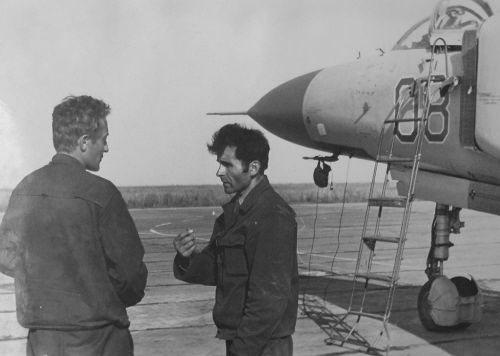
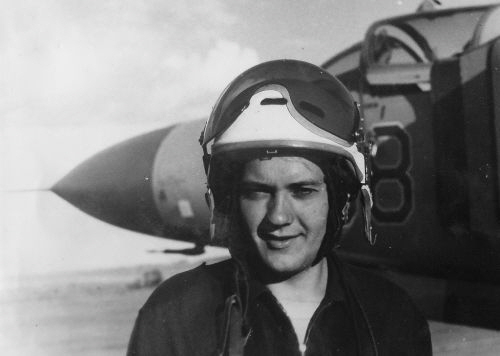
Furthermore, although the Frontline Aviation Command ordered the camouflage painting of all fighter aircraft as early as 1978, this directive was implemented slowly, if at all, in the Soviet Far East. The MiG-23M ‘Flogger-B’ aircraft of the 404th Fighter Aviation Regiment's 1st Squadron retained their factory air superiority gray scheme until the mid-1980s. They only received camouflage patterns during industrial overhauls in the latter half of the decade. Ultimately, Ultimately, Moscow was very far away, and the good quality military paint rarely reached such remote garrisons too. Photo: Vladimir Tursky collection
Tensions did not ease at the Orlovka airfield during the first half of the 1980s. In early September 1983, following the shootdown of Korean Air Lines Flight 007 (a Boeing 747 airliner) by the Soviet Air Defense Forces Su-15 'Flagon-A', the 404th Fighter Aviation Regiment was placed on high alert once again at Orlovka. The high military headquarters conducted unannounced readiness inspections.
Subsequently, the personnel of the 404th regiment's 1st Squadron were redeployed to the Dolinsk airfield on Sakhalin Island. Here, they—along with personnel arriving from other units—relieved the full personnel of the 777th Fighter Aviation Regiment, which had shot down the South Korean Boeing.
Following this, on November 2, 1984, at 14:22 local time, the 404th Regiment lost a MiG-23M aircraft. During its landing approach at an altitude of 120 meters (390 ft), the engine stopped out and caught fire. At an altitude of 90 meters (295 ft), the pilot ejected upon receiving orders from the control tower. The aircraft crashed into the embankment of the near approach path, while the pilot landed approximately 500 meters away from the crash site.
Tensions with China did not ease in the region either. Matters were not helped when a MiG-23M 'Flogger-B' tactical fighter from the 404th Fighter Aviation Regiment crossed the Chinese border due to a navigational error and flew 200 kilometers through Chinese airspace. The blunder was caused by the incorrect configuration of the RSBN short-range tactical radio navigation system.
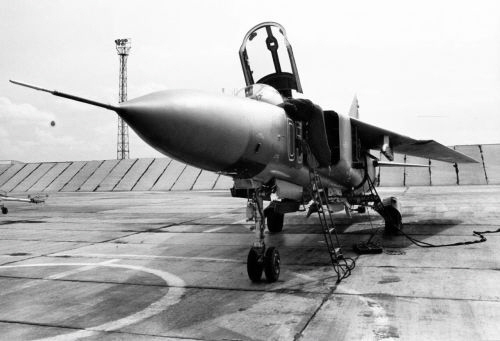
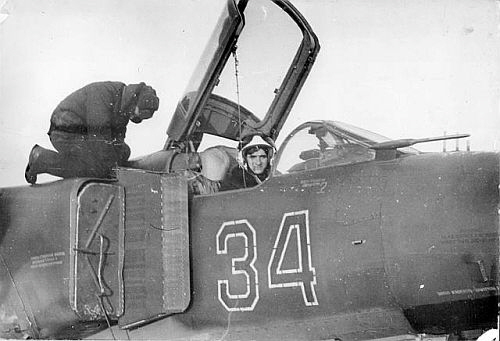
In the early 1980s, the 404th Fighter Aviation Regiment was detached from the 33rd Mixed Aviation Division and operated as an independent fighter aviation unit until the second half of the decade. Armed with three aviation squadrons and a fleet of nearly fifty MiG-23M 'Flogger-B' and MiG-23UB 'Flogger-C' aircraft, its mission within the Amur region was to provide fighter escort and air protection for the Su-17 'Fitter', MiG-27 'Flogger', and Su-24 'Fencer' aircraft of the 33rd Fighter-Bomber and 38th Bomber Aviation Divisions in the event of a possible Sino-Soviet conflict.
Those who served there characterized the 404th Fighter Aviation Regiment as a straightforward, working-class combat unit that rarely attracted the privileged due to the substandard living conditions. Owing to the nine months of intensely cold weather each year and its extreme isolation, it was unofficially regarded as a 'dumping ground'. Yet, for many of them, the Orlovka airfield would later come to represent the days of their youth.
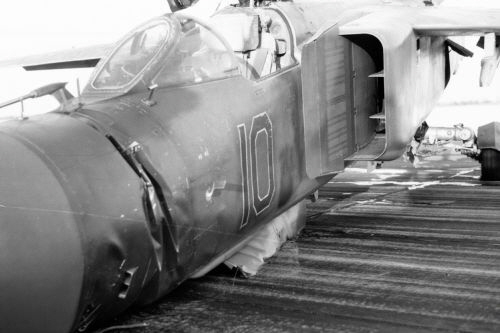
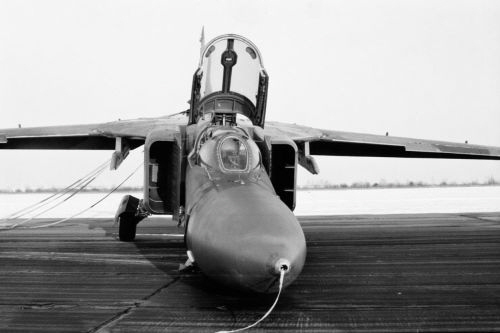
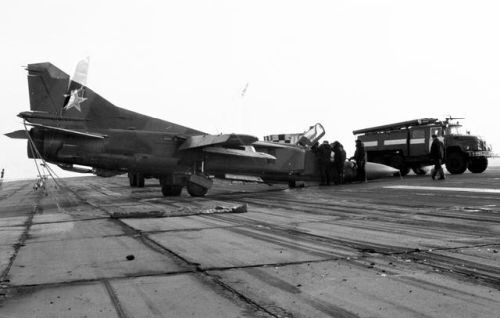
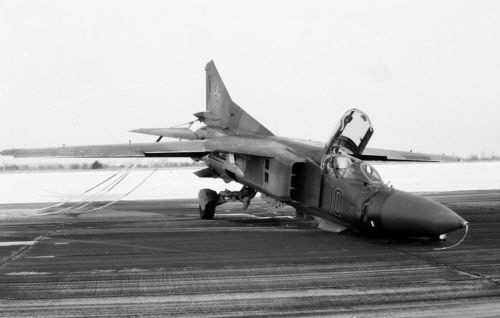
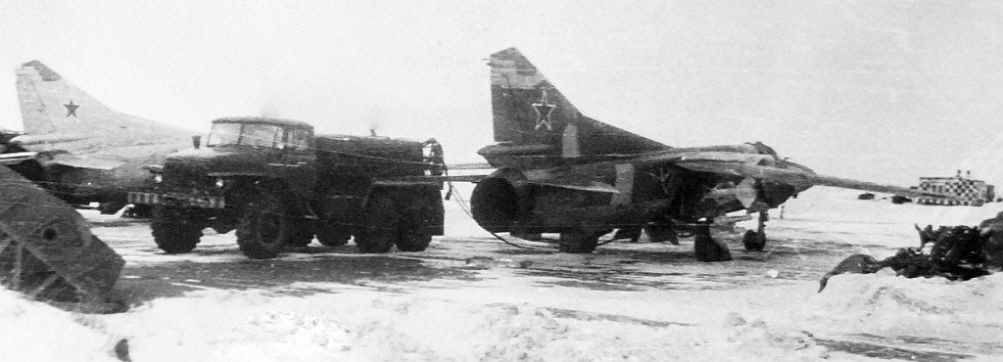
The 404th Fighter Aviation Regiment's final accident with MiG-23 prior to transitioning to the MiG-29 ‘Fulrum-A’ at Orlovka airport. Photos: Vadima Babenko collections
You might be interested in:

Soviet Far Eastern Military District 1st Special Tactical Air Army between 1975 and 1979

Tags:
Soviet Union, USSR, Soviet Air Forces, VVS, Cold War, Soviet Far Eastern Military District, 1st Tactical Air Army 1968, 1st Special Tactical Air Army 1968, 404th Fighter Air Regiment, Ozernaya Pad, 404th Fighter Aviation Regiment, MiG-23M Fresco, Mikoyan and Gurevich, Sukhoi, Mil, Yakovlev, Sino-Soviet border conflict, Zhenbao (Damansky) Island, Sino-Vietnamese War 1979
Облако тегов:
Союз Советских Социалистических Республик, СССР, Военно-воздушные силы, Холодная война, ДальВО, Дальневосточный ВО, Дальневосточный военный округ, 1-й ВА ДВО, ОДВА, ВВС ОДВА, 1-я воздушная армия, 1-я ВА, 404-й истребительный авиационный ордена Кутузова III степени Таллинский полк, 404-й ИАП, Озерная Падь, Кремово, МиГ-23М, Микоян и Гуревич, Сухой, Мил, Яковлев, Пограничный конфликт на острове Даманском, Советско-китайский раскол, Китайско-вьетнамская война 1979